Featured Posts

It is Time to Take a Stand!! I want to thank everyone for the tremendous support for the #PositivelySocial campaign.  We were able to reach millions of impressions during the course of the day, but beyond that we have found many...

Readmore

What It Means to be #PositivelySocial (Aug 14) Have you seen this video by Adam M. Smith? If you are involved in social media you probably have because it has been a hot topic of conversation.  This is where #PositivelySocial meets the offline...

Readmore

What It Means to be #PositivelySocial (Aug 14) Have you seen this video by Adam M. Smith? If you are involved in social media you probably have because it has been a hot topic of conversation.  This is where #PositivelySocial meets the offline...

Readmore

A Day to be #PositivelySocial For those of us who have participated in social media for years, we have grown to respect how the space can drive change. In fact, if you are like me, you love it.  Ordinary citizens have the power to...

Readmore

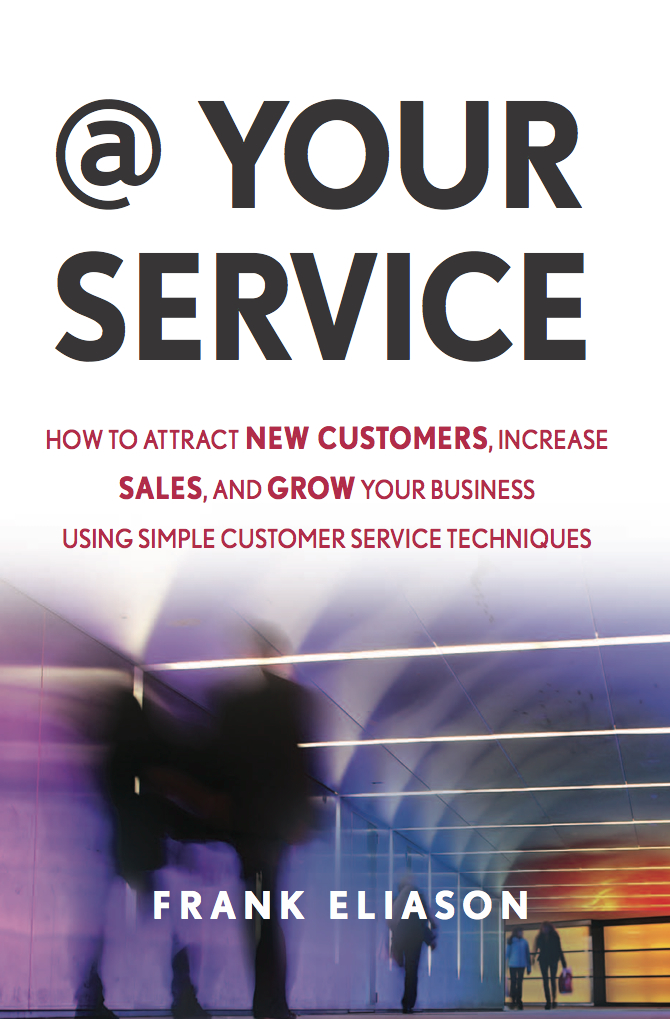
Welcome to an @YourService World My book, @YourService is now available via Amazon, and coming soon to a book store near you!  The book was originally titled in my mind as Common Sense.  The reason for this is service has been in...

Readmore

  • Prev
  • Next

Remarkable Experiences: Is Your Brand Shareworthy?

Posted on : 28-01-2013 | By : Frank Eliason | In : Business, Customer Service, Inspirational, Leadership, Personal, Social Media

Tags:

2

The Merriam-Webster Definition of Remarkable as
“worthy of being or likely to be noticed especially as being uncommon or extraordinary”

In 2003 Seth Godin introduced us to the Purple Cow, explaining in the future the key for brands is not striving to message the masses, but instead look to the extremes. Stated simply, we all see cows all the time and do not think to comment, but if you saw a purple cow, now that is something that is remarkable.

People are striving to get their brands noticed through all types of channels, especially social media, but in this day and age it is not as much about the content of the brand, but the willingness of regular people like you or I to discuss the brand. The challenge is most larger brands have sought to go after the mass market. Oftentimes this results in brands being average, or not very differentiated from other competitors. They are not remarkable in any way. This is why I believe larger brands will often struggle in an age where we are bombarded with messages from everywhere, and we are going to filter the message that most resonate with us. These messages are often found not from the brands, but with people we relate to and trust.

Now I would like to ask how you personally use social media? What brands do you like to discuss? For me, I like to talk about experiences that I consider amazing, or, more often than not, poor. This is why I wrote my book @YourService. For years companies have told us how great their service was, but reality proved to us differently. Now that we control the brand message, we will and have, set the record straight regarding our experiences with products, especially when that experience is at one of the extremes.

I have often said that a social world is a better fit for small and mid size businesses. This is because these businesses are often nimble and hungry to win. It is also because they tend to be the best suited for a relationship driven world, which to me is what social media is all about. This past weekend I had witnessed this in action and wanted to share the experience here. The story starts when I moved into my house a year and a half ago. At the time I knew I needed to replace the stove and ventilation system in the kitchen. I have put it off as long as I could but now it must be done. The challenge for me is the remaining appliances are not in need of replacement, in fact they look relatively new. I know in the future, I would love to upgrade all of them, but as you know that can be a costly undertaking. Over the past month I started shopping around trying to figure out what I may want and what the best long term approach was. At first I priced replacing all the appliances with what I would love to own, but that was not going to work out. I then decided I would try to find a middle ground and find something inexpensive, but something I could build on in the future. I did all my homework, even finding great prices online. In doing this, I noticed one of the appliance stores I already visited, Mrs. G’s in Lawrencville, NJ, had some floor models on clearance, which would help keep costs down yet possibly provide something worth building on in the future. I went to the store to compare the floor model item to a few other brands I was considering. When I arrived I was immediately greeted by a few people offering to point me in the right direction. The kind woman offered to set up our kids with coloring books while we looked at the items. If you have ever shopped for appliances with kids, you know exactly how pleasing this action was. She was also kind enough to help connect me with the salesman I spoke to the other day.

As my kid were coloring, and being offered cookies and candy, my wife and I looked over the appliances, hopefully narrowing our direction to one model. I mentioned to the salesman what we were considering and I asked about the floor model for the higher end brand that I saw online. Unfortunately the model we saw online was no longer available. I told him if we went that direction we would probably then buy online due to a cheaper price I found. We then went to look at the other models we were considering. As we continued to chat he understood my concern at spending too much money, especially if we decided to redo all the appliances in a few years. This was the top reason for our reluctance to buy sooner. I think we were hoping another appliance would go, forcing a decision. Anyway, he then suggested looking at a completely different type of cooktop that would be a little cheaper yet have a very nice look no matter the other appliances present. This new option turned out to be the ideal option for us. As we spoke he suggested looking at two, one of which had a floor model available at a very good rate. What a great solution to our problem. We were able to get great products but at a price that we would not be upset if we had to make changes in a few years. I am so thrilled by it.

What made this situation remarkable were a few key points:

  1. Listening – The salesperson was listening not just to the words I stated but also understanding the overall situation. This placed him in a position to point out alternatives that would meet all my needs. Listening is not about hearing words, but truly building an understanding. Unfortunately most companies say they listen but the reality is they do not understand what is being said
  2. Valuing My Time – I already spent a great deal of time on this effort and really wanted to bring it to a conclusion and this transaction was completed very quickly
  3. Winning with my Kids – My willingness to spend time on a transaction really depends on how the kids are during my time there.
  4. Culture – When I visit a store I love watching all the employees and how they interact with each other and Customers. I noticed this from the first greeting, to the leader and founder’s granddaughter, Ms Debbie, Schaeffer taking our kids to color at one of the desks, to watching the other Customer interactions and even joking among the staff. My favorite moment was when one of their support team members came to me asking if he could give the girls cookies and milk. Every person in the organization seemed to understand the new relationship world we are in.

Thank you Mrs.G’s and congratulations on your success. It is obvious to see why! This experience was remarkable to me and I look forward to continuing to build the relationship with you!  Mrs. G’s created an experience that was shareworthy.  How often does your brand?  Social media is so much more than marketing, PR or branding and now businesses are starting to understand that.  What brands have you found to be remarkable?

Now this does not mean every company should strive to use service as a way to be remarkable, in fact over on LinkedIn I posted about another brand who takes the exact opposite approach, yet they too are remarkable and shareworthy!

A Day to be #PositivelySocial

Posted on : 31-07-2012 | By : Frank Eliason | In : Business, Inspirational, Social Media

Tags:

34

For those of us who have participated in social media for years, we have grown to respect how the space can drive change. In fact, if you are like me, you love it.  Ordinary citizens have the power to drive change in government, or in some of the biggest institutions on the planet. As a Customer Service person, I love how it is changing the status of Customer Service within organizations. As an observer of the phenomenon I know the world is changing, and I hope it is all for the better. At the same time I have been watching conversations via social media becoming more snarky and personal attacks seem to be growing. I do not think most people do this, but what has occurred is we attract people with many of our same ideals which further validate our position. Then when others question this position we go on the attack. Often times social media is referred to as a cocktail party, but when would you call someone an idiot or worse things, while at a cocktail party?  Okay some of you might, but I think most of us would be more respectful of their views, and often be open to listening.

There are numerous examples of the negativity in action, including hot topics like #NBCFail, Olympics, Penn State, Chick-Fil-a, the Presidential election, Health Care legislation, and the list goes on. I have seen so many posts on each of these topics that start with ‘If you do not agree with…you are…”  What happened to having a dialogue?  That is what social media is really about.  One of my favorite topics to follow involved a young girl named Cathryn Sloan.  There were numerous posts that called her numerous things, all because she expressed a view. For those who may not have heard of Catheryn, she is an aspiring writer trying to make a difference, not that different to many of us when we were 25.  She recently did a post on NextGen Journal titled ”Every Social Media Manager Should Be Under 25.” Needless to say this put many social media managers on edge to tell her how she knows nothing. Were we fully listening to her? Did we create an environment that would allow for a thoughtful discussion? I am not sure we did. It was very personal and the attacks were piling on. But why? People viewed her post was an attack on them.  We talk often how important it is to listen via social but I am not sure we are always doing that.  I took the time to read other posts by Cathryn and I found a theme. Like many in the Occupy Wall Street camp, as well as others in her age group, she has been frustrated by the lack of jobs. This is an important topic, that I think if we had an open dialogue we could help solve.  This too can be the power of social media.

As a person who started using social media for business with websites like Comcast Must Die, I recognize why many business leaders tend to see social media as the “snarky web.” I also have a few favorite websites like the Consumerist who have made a name for themselves by sharing some very negative conversations about business.  Although they do post positive stories as well the Consumerist is probably most recognized for their annual tournament to win the Golden Poo award. I also know the abuse that happens via social media, usually directed at businesses, but sometimes it does get directed to individuals. It has happened to me on multiple occasions, as I am sure it has to many of you that are active in the space. Sometimes it can be downright hurtful. For those of us with a Customer Service background, we know that it happens all the time through all communications means. I am sure I have been unintentionally guilty of it too, but I also know that I can strive to make a small difference, just as each of you can.

This idea has been on my mind for a number of weeks, but as I was reading up on the latest news, including many discussions on the Olympics. One of the hot topics has been about Tom Daley, the British Olympic Swimmer.  There were hopes that Tom would bring home the gold but he came in fourth place. I am sure many people rallied around him, but there was at least one who went a very different, unacceptable direction.  First this person tweeted how Tom let down his father.  Tom relayed the tweet with a message that his father passed away. There were a few other tweets culminating with ”i’m going to find you and i’m going to drown you in the pool you cocky tw*t your a nobody people like you make me sick.” You can read more of the incident here. Having dealt with similar offline, I am happy the police are looking into it, and I hope the person receives any assistance they require. I then started to read people who were upset that the police were involved because it was just a tweet. When did that get to be acceptable?

We used to think the best was ahead of us, but due to the economy, negativity from politicians (in my view this is from all sides of the political spectrum), and other shifts within society (including social media), many of us have lost that belief. It is time we as a society start bringing that back and it starts with us. I think we can easily do that by starting with a day to recognize the positive things in our life, even things companies are doing well and others around us.  I picked August 14, 6 months after Valentine’s day.  I like the #positivelysocial hashtag recommended by Cari Sultanik but if you have other ideas for naming it, please include that in the comments.

If you like the idea, please help me spread the word to others. Driving change by recognizing the positive can help send a message and have just as strong an influence as the negative. I think it is time for us to lead this!

Related Posts

Scott Monty’s Post “When Did We Get So Nasty”

Another Post I did on Topic for Social Media Today “Dear World”

What it Means to be #PositivelySocial (Aug 14)

Welcome to an @YourService World

Posted on : 12-04-2012 | By : Frank Eliason | In : Business, Customer Service, Social Media

Tags: , ,

1

My book, @YourService is now available via Amazon, and coming soon to a book store near you!  The book was originally titled in my mind as Common Sense.  The reason for this is service has been in trouble for years, but, thanks to social media, the Customer is gaining even greater control over your brand image.  Now it is key for companies to deliver on their brand promise, otherwise Customers will define that promise for them.  Customer Service has struggled for years in developing their identity; oftentimes referred to as a “cost” center.  Companies had the opportunity to change this on their own, but instead the call center became the “sales” center.  Don’t you love call centers that run as sales centers?  Every time you call, instead of focusing on your needs or the reason for the call, they focus on selling some additional service.  Social media is a game changer.  Many have thought the change was too marketing or PR, but in my mind it is really a change to the overall culture of the company, and the Customer will now be first!  I hope you enjoy reading the book, and please share with others.  Together we can change the Customer Service industry and drive all businesses to focus on the relationship!

Here is a foreword from the book written by Jeff Jarvis:

I thought Frank Eliason had a terrible job: handling complaints from customers for the largest company in a much-disliked industry, Comcast.

But he did wonders. He fixed customers’ problems. He doused a bonfire set by a well-known grump (I’ll let Frank tell you about ComcastMustDie.com). But most amazing—with humor, directness, and credibility—he put a friendly, human face on a cold corporation.

He did it on Twitter. While many other companies were just discovering social media and using it mostly as a promotional platform for their institutional messages, Frank used his Twitter name, @comcastcares (picked, I’d like to think, with just a dash of irony), to talk with customers, to listen first, and to build relationships. He lived and worked the precepts taught by that seminal work of Internet culture, the “Cluetrain Manifesto,” now a decade old, which decreed that markets are conversations; conversations are held among people, not institutions; and we customers can hear the difference.

Frank brought his company back from the brink of its own Dell Hell. I should know. I’m the customer who unwittingly set loose a consumer firestorm on Dell when I complained on my blog—these were the ancient days before Twitter—about a lemony laptop. Dell at first ignored the complaints of bloggers, but after a year, when Michael Dell returned to the company’s helm, it dispatched technologists to fix grousing bloggers’ complaints. It blogged with a human voice. It set up a service, Ideastorm, to capture and implement customers’ ideas. In social customer service, Dell leapt from worst to first, setting a model for many to following, including Comcast.

Frank has since moved on, from cable to banking (or some might say, from the frying pan to the fire). And customer service as a trade is also moving on with new tools introduced regularly to help companies track and respond to complaints, sentiment, and memes about them traveling through the net at broadband speeds.

But this isn’t a craft—and Frank’s isn’t a story—of technology. It’s a story of people. It’s about returning to the days when people at companies knew customers by name and customers could name people in companies. It’s about a resurgence of accountability. It’s about the kinds of sensible, courteous, and decent suggestions Frank  give you here to build honest and productive relationships with customers.

Productive. That, I believe, is the next phase in this rapidly evolving field of social customer service: moving past complaints to collaboration, moving from putting out fires to building new products together. In my book, Public Parts, I tell the story of Local Motors, a company that collaboratively designs and builds cars. Now that might sound absurd, but it works so well that the company is not only producing cars—together with customers, making design and business decisions—but the company is also in a position to help even big car companies learn how to make customers partners.

When customers are treated with respect and given the right tools to connect with companies—with the people inside companies—then amazing things can happen. That’s really the moral of Frank’s story about his relationship with customers.

One more note: By day, I am a journalism professor at the City University of New York. As such, I will confess that I cringed when I saw Frank capitalizing the word “customer” at every reference. The copyeditor in me wanted to correct them, to make each lower case. But Frank will explain why he does this and he won me over because we are all Customers.

—Jeff Jarvis Author, Public Parts

What Messages Do You Send to Your Customers?

Posted on : 21-03-2012 | By : Frank Eliason | In : Business, Customer Service

Tags: , ,

2

Business, as well as people, are constantly sending messages to others without realizing it. These subtle messages send clear information, at least in the eyes of others. For many businesses this is what defines your brand to the Customer. There are tons of examples of this in businesses large and small. That receipt checker many companies have does not send a message of security or low cost, but instead it tells every Customer that you do not trust them. Some messages can also be positive, such as the greeter that used to say hi when you entered Walmart. Often this person was older or had a handicap, but they were usually very cheery and they sent a message that Walmart was part of the community. Of course taking them away, as Walmart has done, also sends a clear message. In my upcoming book @YourService I share many observations regarding brands we all know and love (or hate). Often I do not mention the specific brand, but you may recognize them from the stories I share. One of the brands I talk about but do not disclose by name is Lowes, but after reading this post on the Consumerist and my own subtle example from this week, I decided it might be helpful for businesses to learn from them. In the Consumerist post the Customer, Paula, ordered a dishwasher from Lowes.com. As with many Internet orders, the website posts a delivery date. It turns out that the delivery date they post is not to the Customer but to the local store. Why would a Customer care about that date? They want the product in their home!

Overall I love both Home Depot and Lowes. It is this love that causes me to want to see both organizations create the right Customer experience. In general I feel Home Depot faltered under former CEO Bob Nardelli. Under his leadership the stores were not as helpful and obviously focused on costs for Home Depot instead of the Customer. Under Frank Blake, the current Home Depot CEO, they seem to be working to correct that. I will continue to watch with interest. During the Bob Nardelli time, Lowes did an excellent job at filling the gap and creating the right experience, but a few recent subtle examples, make me wonder if they are not going in the opposite direction. In the book I talk about two experiences at Lowes where I wonder if self service has gone a little too far. One example is the cashier asking me to go to the other end of the store to get a new item because the one I had did not have a UPC. Why should the Customer have to do that? Of course I did, without even questioning. In another story I talk about the store only having self checkouts open and watching an older Customer struggling to use it. Should companies force self service? It is interesting that many supermarket chains are starting to get rid of self checkouts, preferring the opportunity to interact with their Customers. I personally like self checkouts for certain items and small quantities, but there are times I would prefer a cashier.

Earlier this week I was in Lowes and once again the only lane open was self checkout. I was purchasing about 20 little bags of bolts and washers. Have you ever done this in self checkout? First to prevent a Customer from accidentally or purposely not counting items, you are not permitted to enter a quantity. So I scanned each one, but of course the scale did not know I put the item in the bag since each item weighed virtually nothing, so it kept prompting the cashier to log in. This happened more often than I can remember during one transaction. This typically would have been a quick in an out with a cashier but due to their system it was a lengthy process. The person watching over the area was great at helping but did not enter any of the items. Tiny bags with UPC codes never easily scan. While I was struggling through this process I watched people walking up with carts of doors and wood, asking the person they are with how they could do self checkout with such bulky items. I finally made it through the process and paid. One cool part about Lowes is if you are a Lowes credit card holder, you receive an automatic 5% discount. So I used my Lowes card. After swiping the card I put it back in my wallet but then their system asked me to enter the last 4 digits of the card. Do you know why that is done? I am guessing that those who created the Lowes self checkout experience do not know either. This was started years ago because unscrupulous people would change the data on the magnetic strip of cards to reflect stolen card information. In a self checkout situation if I were using a card with stolen data, I would know the right digits to enter. Overall a very silly addition to the Customer experience. If you ever want to have fun with a self checkout get a lot of tiny bags of items!

Now let’s compare this to a self checkout experience this week at Home Depot. I ran in to buy a few small thing plus while I was there I decided to but one large deck board. Since I bought more than planned, I did not have a cart. There was a small line at the regular checkout and no one at self checkout, so even with the bulky board, I went there. As I walked up, the cashier walked over to me to scan the board even before I made it to the checkout. He then went on and scanned each item that was in my hand. I put the items in a bag, swiped my Home Depot card and a receipt printed. It did not ask me to type last 4 or even sign.

The process at Home Depot made me feel like my time was valued in every aspect of the experience. It was well thought out from the wireless scanner from the cashier to not weighing items scanned by him. He never had to log into the machine I was at. I also was not forced into the self checkout area, it was my choice. I would hope that the decision not to have cashiers available at Lowes was a local management decision (although poor one) as opposed to a corporate one. Of course the poor design of the user flow is corporate, so a bean counter there may be making the decision to force self checkout too. Either way, decisions companies make like these, impact decisions Customers make on where to shop. If I ever need items that I prefer not to take through self checkout, I know where I will shop. They sent me the message loud and clear! What are subtle messages businesses send to you?

Are We Creating the Age of Me?

Posted on : 31-01-2012 | By : Frank Eliason | In : Business, Marketing, Social Media

Tags:

0

The world is changing around us and in many ways I love how connected we are becoming. At the same time with the good there is always some bad. Their has been much discussion regarding recent legislation to protect copyright infringement and illegal downloads. I am not a supporter of the legislation and I personally believe it is a slippery slope for the government to advocate such actions. At the same time I do believe we should have an open dialogue regarding the issue.

Before I get into that, let me say I think other actions are creating a world about me, instead of the connected world that many of us envision. It starts with the manner businesses operated for years which to Consumers seemed to feel like they did not care. Policy and pricing decisions seemed to be part of back room deals to maximize profits at the Customers expense. Of course these can prove to be short term financial gains but could hurt long term. The record industry as an example limited ways to purchase music, so to get around that Consumers created new ways. Finally the record industry woke up and new alternatives have arrived but they will most likely not be at the same profit margins that were enjoyed for years. I wonder what would have been different if their pricing efforts were considered more fair? We have seen this same impact in movies and television. Of course the industry is only tepidly moving forward and for every few steps forward a few steps are taken back. As an example Starz is discontinuing its deal to distribute content via Netflix. Speculation is they fear its current deal with Netflix is hurting subscribers via cable. From the rumors I heard they wanted Netflix to have some sort of tiered pricing to combat that. For years the movie industry has controlled releases carefully to encourage people to go to high priced theaters, then buy DVD’s instead of renting, etc. In my view the trouble they have with illegal downloads comes down to this control and not creating an @YourService environment. It was all about them, so now their Consumers is saying, no it is about me.

Now we are in a social media world and businesses all over want to be a part of the conversations. They want their Customers to make it about the brand. Toward this effort businesses galore have offered discounts or free product to ‘like’ them or follow their every move. This may spur conversation for their brand, but at what cost? Is this type of marketing going to change Consumer behavior? We have all heard stories of small businesses trying to take advantage of the social world by buying Groupon deals only to find the business inundated with Customers only buying the item on the deal and the business losing a lot of money with little or no repeat business from the group. I think the key for businesses is to have a culture that aligns the experience with their Customer. Building an @YourService environment Customers will want to discuss your brand and build on the relationship you have with them. Trust is key, and very few businesses have it. Do you think the movie or recording industry had it?

I view a lot of work to be artistic, whether it is a book, movie, song, or even a more traditional business product. I want to see artists get their dues. It is hard work. I have been privileged over the years to be provided many books. What these artists do not realize is that I often also bought a copy. I own many duplicates! But I am proud of their work and I want them to have success. At the same time, I trust them so I am more likely to do that. You see I do not see it as a world about me, but rather a world built on trust and relationships. This is the @YourService world I envision.

Is It Just Me?

Posted on : 23-01-2012 | By : Frank Eliason | In : Business, Customer Service, Uncategorized

Tags:

1

I just finished my book @YourService and it is filled with Customer Service stories. It has the good, the bad and the ugly. In my view the businesses must make a shift in the new @YourService economy. Your Customers and employees now control your brand image. Often I am struck by stupid easy things businesses could fix, yet they fail to do so. Is it just me that sees this?

As Customers, new technology has brought us greater ease, yet it has caused us to grow ever more frustrated. Case in point is my recent experience with Best Buy. Best Buy has been an interesting case study for me. Over the past few years the company has gained greater control of their market by the departure of Circuit City. I am a tech geek and have spent a lot of money with them, and most likely will continue to do so (although debating that based on my experience with Amazon). Recently Forbes had an interesting piece on ‘Why Best Buy is Going Out of Business Gradually‘. The post has many strong and truthful observations about Best Buy and ways they could improve. For a few years Best Buy has also been trying to send the message that they are working to improve, including their Twitter Twelpforce initiative, their community forum and ideation efforts, as well as their CEO blog, where he welcomes feedback. I did enjoy the CEO’s post in response to the recent discussion of the Forbes piece. The problem is it should never have taken such a long time to gain reaction from the company. No matter what words are said, actions are louder. Online feedback regarding the retailer has been negative for a number of years, and I have yet to see evidence of any changes the company has made to create the right experience. I should note that I know many people within the Best Buy social team and I adore them. The failure here is not their efforts, it is the failure of the leaders to understand their Customer. Winning in social media is not some program, it is creating the right experience for the Customer where they want to talk about your brand.

Unfortunately I want to speak about the brand in a negative manner, because that is more fitting of my recent experiences. As Consumers, I wonder if our actions have told companies that poor service is okay! I especially think that way because I tend to attract it. That is probably for a post another day. On Black Friday I was wasting time so I went window shopping at Best Buy. While I was there, a TV caught my eye and the price was great. I decided to buy it. Well after waiting really long (not in a line mind you, just one Customer was doing some odd things involving credit, which they were not approved). There were 3 associates there but no one could do anything while this situation played out. So I went online and ordered the TV from a store that was on my ride home. When I arrived I already received the email that it was ready so I went to pick it up. Amazingly there was no line late in the day for pickup so I thought I would be in and out. Well that was not the case. It took well over 40 minutes to get the item from the back. I chalked that up as my fault for shopping on Black Friday. A week later I decided to order an accessory for the TV. I did it online with store pickup. This is where I started to see the dysfunction of the company. About an hour after ordering I went to pick it up. I never received the email but in my prior experience this typically took about 30 minutes. I went to the store and the associate said there is nothing they can do until ‘they’ transmit it to us. First of all they is you and you are Best Buy. After waiting in the store for 30 more minutes, I decided to pick it up myself figuring I could easily cancel the order. Probably my mistake too. First they could not cancel the order in the store. The mysterious ‘they’ had to do it. You also are not able to do it online. Now this makes business sense, take someone who prefers to self serve and send them to a call. If you want to save money, make it easy to do things online! Calling is a trip, but needless to say, after many transfers it did not happen. I did learn that if you do not pick up the item, eventually they cancel it, so I did that. That brings me to my latest. I ordered a game system and some games for store pickup. When I received the first email it had an item with the wrong store as the pickup location. I quickly relooked at the order and for some reason the incorrect store was listed for 1 out of 7 items. Why would your online system even allow that to happen? Bad Customer experience! An easy warning asking do you want to pickup items at two locations would resolve this. Of course I still blame myself for not catching it prior to submitting the order. I do take issue with what transpired next. I called to cancel the order. When you do the only real option that fits is speak to someone, so I select that. Once you get to that point you have to describe your issue, and more importantly, the product you purchased, then you are transferred to describe it all over again. Of course you do not get to describe it when you are transferred to dead air or disconnected. After working on this for 30 minutes, I give up and head to pick up my items. I assumed the products were ready, even though the confirmation only listed two items. I luckily assumed right. While driving I called again and on the 4th attempt I was able to get the item cancelled. Why do I have to go through all that? Why, as I was getting increasingly frustrated, did no one empathetic to my frustration? I am willing to bet it happens so often that the agents simply do not care. This is all emblematic of a larger cultural issue.

As I vented this on Twitter, others came out to vent frustration, including Lon Seidman, who shared a strikingly similar post from 2009. Now I do love Best Buy and hope I start to feel the difference, but if it does not happen soon, I am afraid I will be seeking alternatives. Is it just or is service going downhill?

Do You Build the Right Messages for Your Customers?

Posted on : 18-01-2012 | By : Frank Eliason | In : Brands, Business, Customer Service, Uncategorized

Tags: ,

1

I had a great experience returning an item to Lowes last week. The cashier made if fast and was very friendly. She even noticed, without me saying, the color difference which was the reason for the return. Even with that great experience I left with a different message and it is something that can help other companies too. Like many retailers, the service desk is located by the front of the store. It is fairly open area, so it is easy for Customers to see behind the counter. I am always fascinated by hand written signs behind service counters. They usually are something about the policy. In this particular location the sign was signed by the Loss Prevention department, so of course, I had to read it! I did take a picture but it was too blurry to share. Basically the message was to the service team. It was a reminder of a policy about Customer or employees trying to exit through the entrance. I immediately thought about all the times I exited through the entrance. 9 times out of 10 it was because I forgot something in the car. No the 1 out of 10 was not theft! It was because they did not have what I was looking for so I was leaving. Anyway the sign tell the service personnel if anyone tries to exit through that door, you are to immediately stop what you are doing, including helping other Customers and confront the person using the wrong exit and guide them to the other exit by the cash registers.

I should be clear that I understand the need for loss prevention, and years ago even did it. There are benefits for Customers in keeping costs low. That being said, telling a service agent to break away from the Customer they are helping to help the loss prevention team, is ridiculous. It is not the Customers fault that the loss prevention team is not able to watch the door properly. I also do not think it is a good practice to dictate what doors a Customer must use.

In this new world of @YourService it is important to know the message you are sending to your own employees and Customers. Their interactions are what define your brand. This handwritten memo is an example of this message. Have you seen message like this? As a Customer how do they make you feel?

Picturesque Service

Posted on : 17-01-2012 | By : Frank Eliason | In : Business, Customer Service

Tags: ,

1

20120117-072245.jpg

It seems with all the technology we as Consumers are still growing frustrated by the service experience by companies. It seems to me many companies just created a patchwork quilt to meet the demands of their Customer. Of course many new companies, built from the ground up, are finding new ways to surprise and delight. Today I want to tell you about one of those experiences.

Our story starts with An email from a friend about a free picture book offer from Shutterfly. With the email we began putting together the book of 2011. What a year to watch the kids grow! Anyway, we complete the book and begin the check out process, but we realize the code was already used. No big deal, we check our email and it turns out we had the same offer, but the email went to junk. The friend that sent it to us was not as lucky. See the email was sent to her by another friend. So she emailed Shutterfly and within an they emailed her a code. She is now very dedicated to Shutterfly, because they could have said any number of things, including the offer was intended for select people, etc. They made it easy.

Today we have fairly low expectations of companies especially when it comes to the Customer experience. This is where Shutterfly differentiated themselves. Through the checkout process we decided to order a few more things, totally about $25. As we went through the check out process a $20 credit was automatically applied. It turns out we earned that credit when purchasing school pictures from Life Touch. Shutterfly did not put the onus on us to remember a code or that we even had it. They applied it automatically. The experiences you create are what lead to social media success (or failure). This is an @yourservice world!

Destroying A Brand in a Social World

Posted on : 15-12-2011 | By : Frank Eliason | In : Brands, Business, Marketing, Social Media

Tags:

1

Much Discussion has been made about how successful companies can market themselves and their products through social media. I personally wonder if anyone truly cares about hearing brands do this, but that is a post for another day. I do know that companies can destroy their brand quickly in this space and I thought it would be fun to look at different ways this happens.

The first thing to recognize is that the brand image is owned by others and not the PR department or marketing. Both of these departments are important but they are no longer in the driver’s seat for brand image. I wonder if they ever were? Again, probably a post for another day. I am not sure things have changed in this regard but perception has. The masses, whoever they may be control it. In reviewing recoveries by brands who have had trouble, we can still determine how a brand can be destroyed in social media.

Many larger brands have had trouble in their history, even before social media became a large part of communications. McDonalds and Starbucks had difficulties at one point in their life cycle and both recovered nicely. Both had similar issues, they had inconsistent Customer experiences at different locations. They also strayed far from their core products. Both recovered in similar ways by working to create Customer experiences that were consistent from location to location. This will always be trouble for franchise type organizations or decentralized business model because the brand image is not as much in the companies control. In recovering they first outlined who they are and what they strive to be. Starbucks founder Howard Schultz returned as CEO. One of the first things he did was bring back the smell of coffee. Very basic but key to a consistent experience. McDonalds focus on cleanliness of locations and consistent food. How consistent is your brand? Are you doing what you are good at or are you trying to be too many different things to various constituents?

Your brand is also owned by your employees. Since there has been a long standing analogy of social media as a cocktail party, what story would your own employees tell at a cocktail party? Would they say what a great place your company is or would they bitch about their job? Worse yet, would they say nothing? Apathy is much worse than negative commentary. At least negative commentary means they want change or improvement but if they say nothing, they do not care at all. Employees have great power over the brand and could help build it further. There are also many examples of employees hurting brands, such as the Domino’s video from years ago. Domino’s did a great job recovery from that event but I am sure it fundamentally changed them.

Customers have the greatest power they ever have. Companies dream of Customers taking their message to others, but as a Consumer how often do you do that? I have done it for Apple and Samsung products as well as a few service brands that wow’ed me, but more often than not, I am more negative due to experiences that did not meet my expectations. Brands may have dreams, but the fact is people will not talk about your brand unless you give them strong reason to. Do you create wow experiences? If not, do not expect people to share your message. Also if you are not a well liked, but create something cool, they may share it with commentary such as ‘this is cool even if I do not like XYZ company.’ This happens because they are not playing to you, but instead they are playing to their crowd. They do not want to get blasted by their own friends for supporting a brand that others do not like.

You win or lose in this social world through the Customer and employee experience. Know what your brand is about and consistently deliver on that.

You’ve Got Mail! How Fast Does Your Business Evolve?

Posted on : 12-10-2011 | By : Frank Eliason | In : Brands, Business, Leadership

Tags: ,

0


‘You’ve Got Mail,’ a term we all loved to hear in the mid 90′s but when was the last time you heard it?  Actually for me it was about a month or two ago.  Do you remember the Tom Hank’s, Meg Ryan movie of the same name?  Yes, I watched it.  That movie started me thinking about the evolution of business.  Although AOL still exists it is a vastly different, smaller company today.  Last week I received an email from Barnes & Noble regarding their purchase of the Customer list from Borders.  Here is an image of the email:

I loved the human tone of the email, particularly this quote from Barnes & Noble CEO, William Lynch:

“First of all let me say Barnes & Noble uniquely appreciates the importance bookstores play within local communities, and we’re very sorry your Borders store closed.”

This brings me back to the movie ‘You’ve Got Mail.’  If you remember the movie, the character played by Meg Ryan owned a small book shop called ‘The Shop Around the Corner.”  Tom Hank’s character, along with his family, controlled the Fox Book Superstore, moving in around the corner.  Fox Books would remind you of any Barnes and Noble or Borders location.  It was very open, featuring a wide range of books, other media, and, of course, the all important coffee bar.  Although the two characters fell in love, ‘The Shop Around the Corner’ does go out of business.  The model changed and the little shop was not able to change with the times.  Now today we see the model changing again.  First Amazon made a strong competitor with their internet book business.  They further pushed the model with the introduction of the well loved Kindle.   The iPad and Apple furthered this evolution, as did Google and their Android devices.

Business models are changing all the time, and the most nimble businesses can bring success to this.  ’The Shop Around the Corner’ and Borders may not have been able to make it, but companies like Barnes and Noble are trying.  Amazon has proven to be a disrupter to the typical business model.  How nimble is your business?  Do you see change before it is too late?


It is interesting, when taken into context of yesterday’s Netflix post.  Evolution is imperative but timing can be very difficult.